

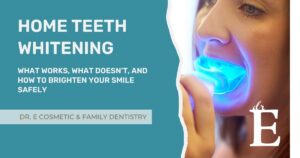
Home Teeth Whitening: What Works, What Doesn’t
and How to Brighten Your Smile Safely
A bright, healthy smile is something many people want, and with countless whitening products and DIY remedies available online, it can be difficult to know which methods are actually safe.
The good news is that you don’t always need expensive treatments to improve the appearance of your smile. The key is understanding what causes tooth discoloration and choosing whitening methods that protect—not damage—your teeth.
Why Do Teeth Become Discolored?
Not all stains are the same. Tooth discoloration generally falls into two categories:
Surface (extrinsic) stains develop on the outer enamel and are commonly caused by:
- Coffee and tea
- Red wine
- Dark-colored berries
- Tobacco use
- Certain foods and beverages
Internal (intrinsic) discoloration occurs beneath the enamel and may be related to:
- Aging
- Genetics
- Certain medications
- Dental trauma
- Natural changes in the tooth over time
Because the cause of discoloration varies, there isn’t a one-size-fits-all whitening solution.
Safe Ways to Brighten Your Smile at Home
While dramatic whitening usually requires professional treatment, several simple habits can help keep your teeth looking their best.
Brush Gently and Consistently
One of the easiest ways to remove surface stains is with regular brushing using a soft-bristled toothbrush and proper technique.
Brushing too aggressively doesn’t make teeth whiter—it can actually wear away enamel over time. Gentle, thorough brushing twice a day is far more effective than scrubbing harder.
Floss Every Day
Plaque and food debris between the teeth can make your smile appear dull. Daily flossing helps remove buildup from areas your toothbrush can’t reach and supports healthier gums.
Drink More Water
Water is one of the simplest ways to help prevent staining.
Drinking water while enjoying coffee, tea, wine, or other dark beverages helps reduce the amount of time staining compounds remain on your teeth. Swishing with water after meals can also help rinse away pigments before they settle on the enamel.
Be Mindful of Staining Foods and Drinks
You don’t have to give up your morning coffee or favorite glass of iced tea, but moderation and timing matter.
Some easy ways to reduce staining include:
- Drinking water alongside dark beverages
- Avoiding sipping staining drinks over long periods
- Rinsing your mouth with water afterward
- Waiting about 30–60 minutes before brushing after consuming acidic foods or drinks, allowing enamel time to recover.
What About Whitening Toothpaste?
Many whitening toothpastes can help remove surface stains, making teeth appear brighter.
However, it’s important to have realistic expectations. Most whitening toothpastes don’t actually change the natural color of your teeth—they primarily polish away external stains.
If you experience tooth sensitivity or have questions about which toothpaste is best for your smile, ask your dental team for personalized recommendations.
Natural Whitening Remedies: Proceed with Caution
The internet is full of DIY whitening tips, but “natural” doesn’t always mean “safe.”
Baking Soda
Baking soda is a mild abrasive that may help remove some surface stains when used occasionally. However, brushing aggressively or using it too frequently can contribute to enamel wear over time.
Activated Charcoal
Activated charcoal has become a popular whitening trend, but current evidence is limited. While it may help remove some surface stains, frequent use of abrasive charcoal products may wear down enamel and should be approached cautiously.
Lemon Juice, Apple Cider Vinegar, and Fruit-Based Remedies
These are among the most common DIY whitening suggestions—and some of the worst for your enamel.
Their acidity may temporarily make teeth appear brighter by removing part of the outer enamel layer, but over time they can increase sensitivity, thin enamel, and actually make teeth appear more yellow as the darker dentin beneath becomes more visible.
Healthy Teeth First, White Teeth Second
Sometimes discoloration isn’t simply a cosmetic issue.
Plaque buildup, tartar, cavities, worn fillings, or gum disease can all affect the appearance of your smile. That’s why it’s important to have regular dental examinations before beginning any whitening routine.
Professional cleanings often remove many surface stains that brushing alone cannot.
Professional Whitening May Be the Best Option
For patients looking for more noticeable results, professional whitening remains one of the safest and most effective options.
Unlike one-size-fits-all products, professional whitening is tailored to your smile and performed with your overall oral health in mind. Your dentist can also help determine whether whitening is appropriate based on existing dental work, tooth sensitivity, or other factors.
A Healthy Smile Is Always in Style
While a brighter smile can boost confidence, the healthiest smile is one that’s cared for every day.
Simple habits like brushing gently, flossing daily, drinking plenty of water, limiting stain-causing foods and beverages, and scheduling regular dental visits can help keep your smile healthy and naturally bright for years to come.
At Dr. E Dentistry, we’re happy to help you determine the safest approach to achieving your smile goals. Whether you’re interested in removing surface stains, learning more about whitening options, or simply maintaining a healthy smile, our caring team is here to help.
Because the best whitening results begin with healthy teeth.
Call us to schedule an appointment or a free second opinion!
Contact us today:
📍 Dr. E Cosmetic & Family Dentistry
Ahwatukee / Phoenix, Arizona
Proudly serving Ahwatukee as BEST DENTIST
📞 Call us to schedule your appointment: 480-494-2435
🌐 Visit us online to learn more: www.drefamilydental.com